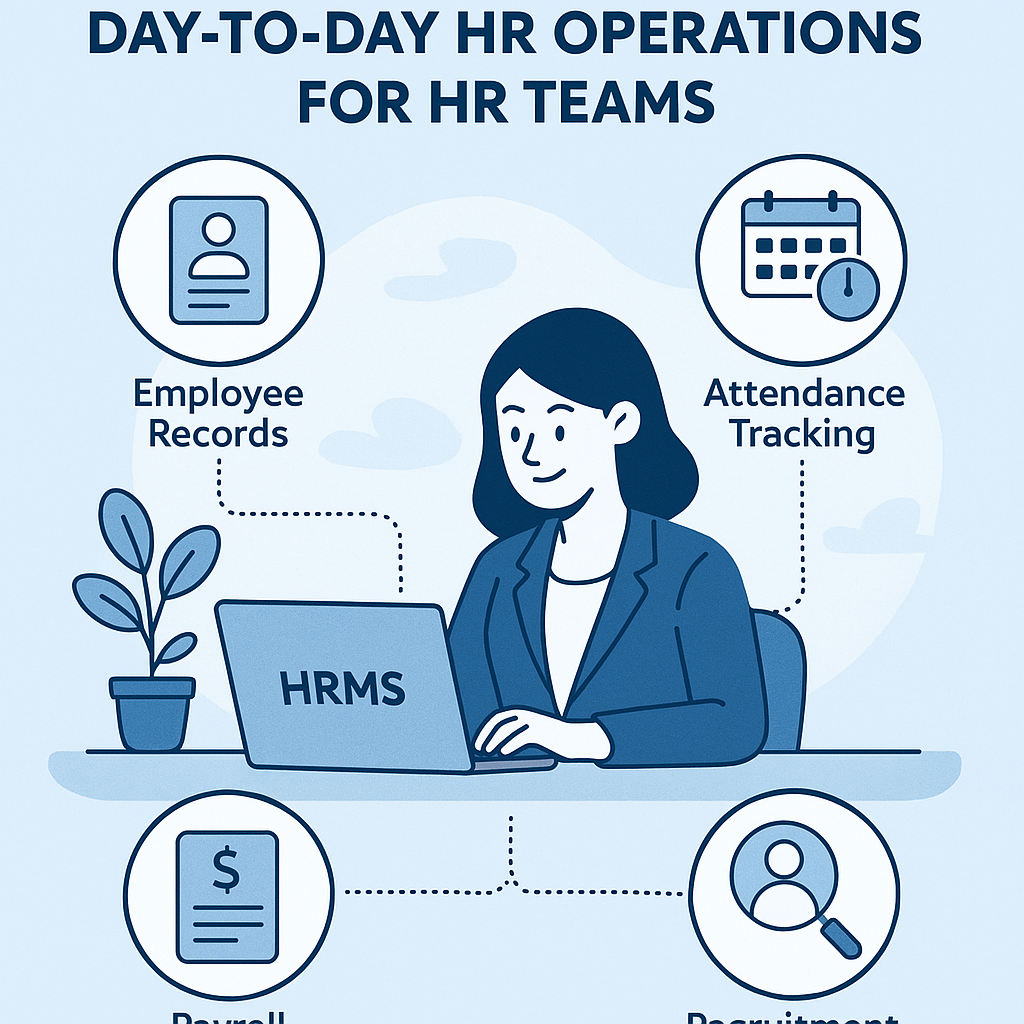
Human Resource Management is the very backbone of any organization. From recruitment and onboarding to payroll as well as performance management, HR teams juggle multiple responsibilities daily. Traditionally, these tasks were handled manually, consuming significant time and resources. However, with the advent of technology, the Human Resource Management System (HRMS) has revolutionized how HR departments operate. By automating routine processes and centralizing data, HRMS empowers all HR professionals to focus on strategic initiatives rather than administrative burdens.
In this article, we’ll explore the top ways HRMS simplifies day-to-day HR operations, making life easier for HR teams and enhancing organizational efficiency.
Recruitment is one of the foremost time-consuming HR functions. HRMS platforms simplify this by offering:
By reducing manual effort, HRMS enables faster hiring cycles and a smoother onboarding experience, boosting employee satisfaction from day one.
Managing employee records manually often leads to errors and inefficiencies. HRMS provides a centralized database that securely stores all employee information — personal details, job history, performance records, and benefits. This eliminates duplication, improves accuracy, and makes data retrieval effortless. HR teams can access real-time information with a single click, ensuring compliance and transparency.

Payroll is a critical yet complex task involving salary calculations, tax deductions, and compliance with labor laws. HRMS automates payroll by:
This reduces errors, saves time, and ensures employees are paid correctly and on schedule — a key factor in maintaining morale.
Tracking attendance and managing leave requests manually can be chaotic. HRMS offers:
This transparency reduces disputes and ensures fair leave policies across the organization.
Monitoring employee performance is essential for growth, but it is often challenging. HRMS simplifies this by:
With clear performance metrics, HR teams can design better training programs and reward systems.
HR teams must comply with labor laws, tax regulations, and industry standards. HRMS helps by:
This decreases the risk of penalties and ensures the organization operates within legal frameworks.
One of the biggest advantages of HRMS is its ability to empower employees through self-service portals. Employees can:
This decreases the workload on HR teams and fosters a culture of transparency and accountability.
Continuous learning is vital in today’s dynamic workplace. HRMS simplifies training by:
This ensures employees remain competitive and aligned with organizational goals.
HRMS often integrates communication tools that allow HR teams to share updates, policies, and announcements seamlessly. Features like chatbots, notifications, and discussion forums enhance collaboration between HR and employees, reducing misunderstandings and improving engagement.
Perhaps the most transformative aspect of HRMS is its ability to provide actionable insights. With advanced analytics, HR teams can:
These insights enable HR leaders to make informed decisions that align with business objectives.
The adoption of a Human Resource Management System is no longer optional; it’s a necessity for modern organizations. By automating repetitive tasks, HRMS frees HR professionals to focus on the strategic initiatives such as talent development, employee engagement, and organizational culture. It reduces errors, enhances compliance, and improves overall efficiency.
Embracing HRMS technology is crucial for all organizations to stay competitive in today’s dynamic business environment. In today’s fastpaced digital world, businesses must embrace tools that drive efficiency and agility, and a Human Resource Management System (HRMS) is at the forefront of this transformation.
By automating routine HR tasks such as payroll, attendance tracking, recruitment, and compliance reporting, HRMS eliminates manual errors and frees HR teams to focus on strategic initiatives like talent development and employee engagement. Its centralized data management and real time analytics empower leaders to make informed decisions quickly, while selfservice portals enhance transparency and employee satisfaction.
Choosing HRMS is not just about streamlining operations — it’s about building a smarter, more resilient organization that can thrive in the digital era.
HR teams today face increasing pressure to deliver results while managing complex administrative tasks. A Human Resource Management System simplifies these challenges by streamlining recruitment, payroll, performance management, compliance, and more. By embracing HRMS, organizations can ensure smoother operations, happier employees, and stronger business outcomes.
Call to Action
Ready to transform your HR operations with a powerful HRMS solution? At SFTEvolve, we specialize in delivering cutting-edge HRMS platforms tailored to your business needs. Whether you’re a growing startup or an established enterprise, our solutions help you automate, optimize, and elevate your HR processes.
Visit SFTEvolve today and empower your HR team with the tools they need to succeed!